

Iceland in winter is one of the most dramatic places on earth. Snow-capped mountains, frozen waterfalls, deserted black sand beaches, and the ever-present possibility of the Northern Lights make it a genuinely special destination. But winter driving in Iceland demands respect and preparation. The roads can be challenging, the weather can change fast, and the consequences of poor decisions are serious. Here’s everything you need to know.
Check road.is Before You Drive — Every Single Day
This is not optional. road.is (Vegagerðin — the Icelandic Road and Coastal Administration) is the authoritative source for road conditions, closures, and weather alerts. It uses a colour system:
- Green: Open and good conditions.
- Yellow: Open but proceed with care. Slippery, gravel, reduced visibility.
- Orange: Difficult conditions. Experienced drivers only.
- Red: Closed. Do not drive.
- Purple: Closed — extreme conditions. Impassable.
Roads are closed for a reason. A closed road in Iceland is not a suggestion — it’s a legal restriction and a serious safety warning. Each year, tourists are stranded, vehicles are damaged, and rescue teams are called out because someone decided to ignore a closure. Don’t be that person.
Understanding Icelandic Weather
Icelandic weather is fast-moving and localised. You can leave Reykjavík in sunshine and hit a whiteout 50 km down the road. The key weather hazards to understand are:
Black ice (hálka): Invisible ice on the road surface, most common at dawn and dusk when temperatures hover around 0°C. It forms on bridges and shaded sections first. If you suddenly feel the car float, ease off the accelerator gently — do not brake hard.
While offering unparalleled views and unforgettable experiences, journeys on F-roads pose significant challenges. Unlike paved highways or even typical gravel roads, conditions are rough, unpredictable, and often unforgiving. Drivers must understand that they bear full responsibility. Any miscalculation, such as misjudging a river crossing or underestimating a steep incline, can lead to delays, vehicle damage, or safety risks.
Iceland’s Highlands are among the country’s most spectacular and remote regions, characterized by expansive black sand deserts, geothermal valleys, vibrant rhyolite mountains, and vast glaciers. These remarkable areas are exclusively accessible via designated F-roads.
For those arranging a rental car in Iceland, it is crucial to recognize that exploring the Highlands demands heightened responsibility. These routes necessitate caution, thorough preparation, and respect for the natural environment. With careful planning and a clear awareness of potential risks, a Highland adventure can be both safe and profoundly rewarding. This guide offers a detailed overview to facilitate secure and well-prepared travel in the Highlands.
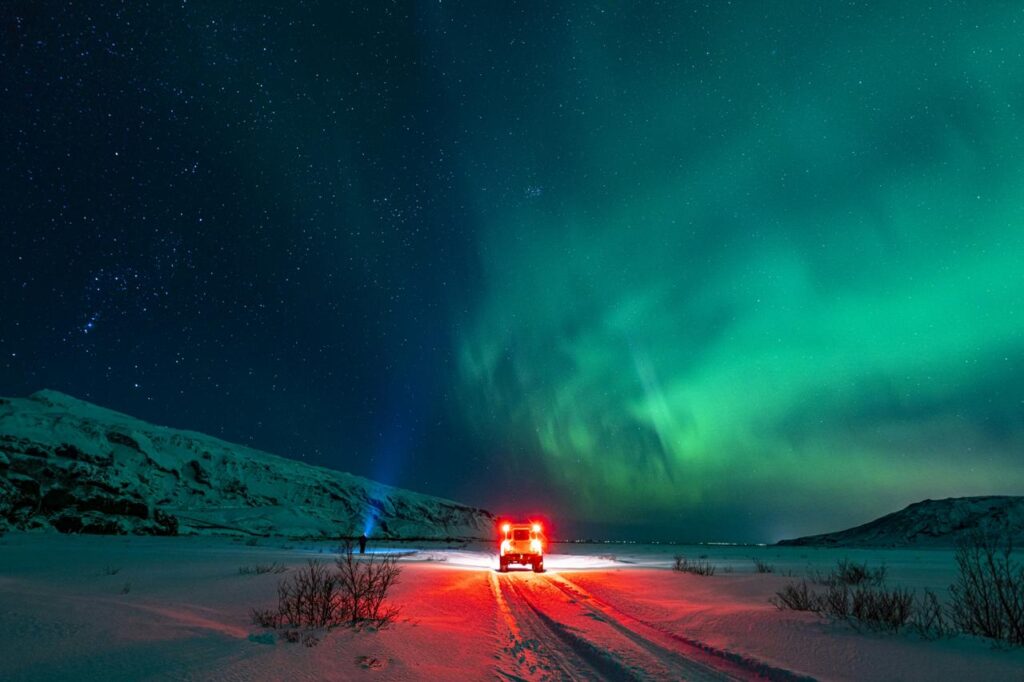
Sudden snowstorms: Iceland’s storms can appear with little warning, especially on the Reykjanes Peninsula and along the South Coast. Keep an eye on the wind speed forecast — anything above 15 m/s starts to affect driving. Above 25 m/s, driving is dangerous and roads may close.
Drifting snow: In open areas with strong winds, snow drifts across roads quickly, making familiar routes hard to follow. In extreme conditions, roads can become buried.
Reduced daylight: In December, Reykjavík gets only about 4–5 hours of daylight. Plan your driving to avoid long stretches in full darkness in unknown terrain.
Winter Driving Techniques
- Reduce your speed. Stopping distances on ice are up to 10 times longer than on dry tarmac.
- Increase following distance. Leave at least 6–8 seconds between you and the car ahead in icy conditions.
- Brake early and gently. On icy roads, sudden braking causes skids. Apply brakes progressively.
- Steer into a skid. If the rear slides out, gently steer in the direction of the skid to regain control. Do not overcorrect.
- Use engine braking on downhills. Downshift to a lower gear rather than riding the brakes on steep descents.
- Never use cruise control in icy conditions. You need full manual control of your speed at all times.
Essential Winter Gear
All Esja Car Rental vehicles come equipped for Icelandic conditions, including:
- Winter tyres fitted as standard from November to April
- Ice scraper and snow brush
- High-visibility vest
- Emergency triangle
We strongly recommend you also carry warm clothing, snacks, and a charged phone with the 112 Iceland app installed. This app allows you to register your travel plans and send your GPS location to emergency services with a single tap.
When to Stop and Wait
This might be the most important advice in this article: sometimes the right decision is to not drive at all. If conditions deteriorate significantly, find a safe place to pull over — a petrol station, a car park, or a layby — and wait. Iceland’s storms are intense but usually brief. A 30-minute wait can mean the difference between a scary drive and a safe one.
Safe driving is smart driving, and it lets you enjoy everything Iceland has to offer. Esja Car Rental is here to help you prepare — talk to us about conditions before you set off, and we’ll give you the latest on what’s out there.
Driving Iceland in winter? Esja Car Rental’s fleet is ready for Icelandic winter conditions. See our cars and book →